|
NEW SERIES RELEASE MONETARY MALPRACTICE AVAILABLE NOW MONETARY MALPRACTICE: Deceptions, Distortions and Delusions MONETARY MALPRACTICE: Moral Malady MONETARY MALPRACTICE: Dysfunctional Markets
NOW SHOWING HELD OVER Currency Wars Euro Experiment Sultans of Swap Extend & Pretend Preserve & Protect Innovation Showings Below
FREE COPY... Current Thesis Advisory: CONTACT US
|
Tue. May 21st , 2013 |
We are looking for feedback from 12 more listeners before resuming production. MACRO ANALYTICS- What Do You Want To See IMPROVEMENTS, GUESTS, SUBJECTS? click to submit e-mail FEEDBACK (or email: general@gordontlong.com) What Are Tipping Poinits? |
Reading the right books? We have analyzed & included Book Review- Five Thumbs Up
| ||||||||||||||||||||||||||||||||||||||||||||||||||||||||||||||||||||||||||||||||||||||||||||||||||||||||||||||||||||||||||||||||||||||||||||||||||||||||||||||||||||||||||||||||||
|
|||||||||||||||||||||||||||||||||||||||||||||||||||||||||||||||||||||||||||||||||||||||||||||||||||||||||||||||||||||||||||||||||||||||||||||||||||||||||||||||||||||||||||||||||||||
"BEST OF THE WEEK " |
Posting Date |
Labels & Tags | TIPPING POINT or 2013 THESIS THEME |
HOTTEST TIPPING POINTS |
Theme Groupings |
||
We post throughout the day as we do our Investment Research LONGWave - UnderTheLens - Macro Analytics |
|||
WEAK EMERGING MARKETS - Strong Western Markets due to BUYBACK from Cheap Money |
|||
PETRODOLLAR -Collapsing Foundation The Coming Collapse Of The Petrodollar System 05-20-13 Authored by Andrew McKillop via ZH PETRODOLLAR WAR The theory of Petrodollar Warfare can be attributed to US analyst and author William R Clarke, and his 2005 book of that title which interpreted the US-UK decision to invade Iraq in 2003. He called this an "oil currency war", but the concept of the petrodollar system and petrodollar recyling dates back to the eve of the first Oil Shock in 1973-1974. The role of the petrodollar system as a driving force of US foreign policy is explained by analysts and historians as basic to maintaining the dollar's status as the world's dominant reserve currency - and the currency in which oil is priced. The term "petrodollar warfare" as used by William R. Clark says that major international war, legal or not, was seen as justified to protect the petrodollar system. Over and above the loss of human life, the combined costs of the Afghan and Iraq wars for the US are controversial like the interpretation of these wars as "oil wars", but analysts like Joseph Stiglitz and Linda Bilmes put the total combined war cost at above $4 trillion. This can be compared with - and totally dwarfs - the annual cost of US oil imports, which are now sharply declining on a year-in year-out basis as domestic shale oil output ramps up, and US oil demand stagnates. Clarke's theory, like the explanation of the role and power of the "petrodollar system" depends on two basic drivers. Most major developed countries rely on oil imports, which are purchased using dollars, so they are forced to hold large stockpiles of dollars in order to continue importing oil. In turn this also creates consistent demand for dollars, and prevents the dollar from losing its relative international monetary value, regardless of what happens to the US economy. Variants of the Petrodollar War concept include the role of oil currency conflicts and rivalry, notably concerning US relations with Iran, Venezuela and Russia, and possibly with Europe concerning the gradual replacement of US dollars with the euro, for oil transactions. More important, the entire petromoney system and the potential for Petrodollar War hinges on global oil import demand and the oil price. Both of these have to hold up. When or if they do not, foreign oil importer nations who formerly found it beneficial to hold dollars to pay for oil, would have to find some other (unexplained) reason for huge holdings of dollars, when their oil imports decline and-or oil prices also decline. The "currency war" variant of the petrodollar system theory, holding that a shift to notably euros or gold for oil payments would undermine the system, is unrealistic when given any serious analysis, because all world moneys are interchangeable or convertible, and gold is priced in US dollars. THE THREE PHASES OF THE SYSTEM These are easy to define. 1974-1986 The first phase. The 1972 start of "petrodollar recycling" initiated by Nixon and Kissinger just before the fivefold rise in oil prices of 1973-74, set the process of US-Saudi Arabian cooperation for the near-exclusive benefit of these two players. The US dollar was "backstopped" by the transfer of Saudi liquidities to the US Federal Reserve system banks, especially the Federal Reserve Bank of New York. A small number of other chosen central banks, especially the Bank of England, and the central banks of Germany, France, Italy and Japan also benefitted. 1986-1999 The second phase. This also featured US and Saudi control, but under Clinton's two mandates the focus radically changed to the controlled deflation or reduction of both oil prices and the world value of the US dollar. While the US continued to benefit from "petrodollar recycling", Saudi Arabia was the major loser, undoubtedly changing its perceptions of the system's utility to KSA. 2000-2013 The third and last phase. This period featured a major longterm rise in oil prices and the entry not in force, but progressively of the euro currency into the now enlarged "petromoney recycling" process. Euros now cover about 25% of global oil transactions, for an annual value of around €700 billion, with about the same amount of back-to-back additional lquidities. The massive growth of QE and central bank "easing", from 2008, has heavily reduced the role of "petromoney recycling". Among the major changes of the petromoney system during these 3 phases, the first phase set the basic political concept among US deciders that "petrodollar recycling" could at one and the same time enable the US to run huge trade and budget deficits, low or very low interest rates, and prevent the collapse of the dollar's value due to the forced need of all world buyers of oil to hold US dollars to make purchases of oil. By the second phase, this underlying concept shaded to including non-oil assets as the focus of value manipulation, controlled inflation and controlled deflation of value. In the third phase, massive increases of the oil price to 2008 played a major role in enabling the continued depreciation of the dollar's world value as US sovereign debt also massively increased, but since 2008 and the start of central bank QE the need for, and role of the petrodollar system have heavily contracted. THE SYSTEM IS NOW MENACED Estimates of the exact size and role of petrodollars and petroeuros in the international money system, finance system, and economic system are varied. Many analysts however say the minimum role of the petrodollar system is to create, back-to-back, liquidities at least equivalent to the transaction value of the world oil trade, which for crude and products is about $3.4 trillion-a-year. Combined, the approximate minimum total $6.8 trillion annual value of oil trade plus the petromoney system is about 10% of world annual GNP, equivalent to about 45% of US annual GDP. This may appear as still large and important but has to be compared with, for example, the exposure of national private banks only in Europe in relation to national GDPs, which is often 300% - 400%. Only QE can "plaster over" these liabilities. Petromoney recycling is still treated by "the elites" as a critical prop to monetary system integrity, and explains why the USA is far from the only country depending on the system holding up. All oil producers, even smaller-sized, are beneficiaries the same way as all major developed nations' central banks, but the US is still the prime beneficiary. However, the basic supports for the system's operation - continuing high oil demand, high oil prices, and oil priced in dollars - have all weakened or are threatened, today. In particular when global oil demand declines or stagnates, and when oil prices decline, the dollars that will no longer be needed for global purchases of oil will return in massive amounts back to their country of origin, the USA. The consequences can only be dramatic, and threaten the start of a process completely unlike the Clinton-era controlled devaluation of the dollar's value along with the decline of oil prices consented by Saudi Arabia. The now-menaced "petrodollar system" is also weakened because of worldwide change in the perception of oil and oil energy. From the dawn of the petroleum age to its accelerating twilight, today, geopolitical strategies concocted by developed nations featured the maintenance of secured access to world oil supplies. This was believed to be a win-win strategy for developed nation policy makers, and especially for US policy makers. From the 1970s and the first Oil Shock of 1973-1974, the only "morph' in this policy and strategy was to substitute expensive oil, for cheap oil. For the USA's ability to run deficits and the petrodollar system, much higher oil prices were a major gain, not a loss, and this is almost surely still the perception of the Obama administration today. In its first phase and last phase, the economic and political incentives for ensuring national access to oil supplies, and the existence of the petrodollar system as a monetary and finance tool - unrelated to the economy - worked better with higher oil prices. Today however, with the major and massive changes of oil resource availability revealed by the shale energy revolution, rising global oil production capabilities, stagnating oil demand, and rising renewable energy supplies in all major developed countries, and the constantly declining role of oil in the economy, the Petrodollar System's days are surely numbered, like the notion that $100-oil prices are "normal". The impact of this will be massive. |
05-21-13 | GLOBAL RISK |
23 - US Reserve Currency |
EARNINGS - Going Nowhere if it Wasn't For BUYBACKS from Cheap Debt WTF Chart Of The Day: "It's All About The Earnings" 05-20-13 Zero Hedge "Earnings are the mother's milk of the stock market," is the oft-repeated anthem of a million marching lemmings; parroting the same phrase come hell or high-water in the dismal hope that they can gather moar assets-under-management, garner moar fees, and make moar TV appearances. However, as the chart below shows, we suspect perhaps given the reality of earnings expectations that the new normal mantra for stocks-for-the-long-term should be - "Central Bank liquidity is the PCP of the stock market." it would appear the 'mother's milk' is souring... (h/t @Not_Jim_Cramer) and furthermore, since September 2011 earnings have been stagnant - when a multitude of indicators (macro and market) began to decouple from stocks, - driven almost 100% by buybacks... (h/t @RonnieSpence) |
05-21-13 | EARNINGS STUDY |
ANALYTICS |
MOST CRITICAL TIPPING POINT ARTICLES THIS WEEK - May 19th - May 25th 2013 |
| RISK REVERSAL | 1 | ||
| JAPAN - DEBT DEFLATION | 2 | ||
| BOND BUBBLE | 3 | ||
EU BANKING CRISIS |
4 |
||
EU - Too many banks, Too much debt and Too little growth Spot The Odd Continent Out: Total Bank Assets As % Of GDP 05-18-13 Zero Hedge There is a reason why in Europe, no matter how much some want to deny it, the Cyprus deposit confiscation "resolution" has become the norm. Quite simply, as BofA summarizes, "Europe's economy struggles with too many banks, too much debt and too little growth. A long history of empire, trade, war and commerce means a long history of banking. The world’s first state-guaranteed bank was the Bank of Venice, founded in 1157, and the world’s oldest bank today is also Italian, Monte Paschi di Siena (founded 1472). In many European countries, bank assets dwarf the size of the local economy and are far in excess of other regions in the world. This is similarly reflected in the local stock exchanges: even now financials account for 42% of the Spanish stock market and 31% of the Italian stock market versus ust 16% in the US." Visually, this translates as the following dramatic chart, which shows why Europe no longer has a choice in kicking the can, and what we have said from the very beginning, a Mellonesque asset liquidation of bad "assets" is the only option: It is in Europe that the biggest debt burden lies, and it is Europe that is desperate for the biggest inflation impulse to purge away the debt in the absence of liquidation, or a spike in asset quality. However, as we showed yesterday with Europe's €500 billion NPL timebomb, the asset quality of Europe's banking sector is imploding at an unprecedented pace, and is correlated most tightly to the surging unemployment in the periphery, which intuitively makes much sense: without jobs, consumers can't pay off their debt. NPLs: ... compared to unemployment: This means that the only resolution to a massively overlevered banking sector, where inflation just refuses to arrive and assist in the bad-asset "cleansing", is the start of liability impairment, which will allow the long overdue process of balance sheet restructuring, instead of merely can kicking, to commence. Whether this implies deposit confiscation, well that matters in which country one is, and how many NPLs have been accumulated. And another problem: the reason why core inflation is gone from Europe is that not only is the hot central bank money not targeting European assets (except for new Japanese Yen chasing after peripheral bonds for as long as there is a carry trade arb, which at this rate won't last long), but because credit creation in the private sector is dead: as the chart below shows, even credit growth in Germany is now negative: So what is the only option for a continent in which there are simply too many encumbered assets (recall that unlike the US the bulk of credit in Europe is secured - perhaps the starkest difference between the two credit systems) and in which the private sector credit creation pipeline is clogged: simple - the ECB has to join the Fed and the BOJ in monetizing assets, and creating "credit growth" de novo. Alas, as the past three years have shown, when it comes to outright monetization in Europe, not only does it have to be sterilized to appease the (correctly) inflation-weary Germans (i.e., the SMP; the terms of its replacement, the OMT, still technically don't exist), but most likely has to come in the form of a structured debt vehicle or an extended loan, like the ESM or the LTRO. In fact, none other than former ECB member Lorenzo Bini Smaghi told Goldman's Allison Nathan in a recent interview that QE by the ECB - an outcome most expect once the impact of BOJ QE fizzles - is unlikely. The reason why:
Needless to say, his outlook on Europe is less than optimistic:
And to think all of this could have been avoided if the Mellon advice of liquidating bad assets, which have accumulated in massive proportions in Europe (and in the shadow banking system in the US, but that is the topic of a different post), had been heeded, as we suggested, from the very beginning. To quote Andrew Mellon:
Of course, the time for liquidation will come sooner or later, only this time the pain and suffering that will accompany it will be order of magnitude greater than had the system been purged in the dark days following the Lehman collapse. |
05-20-13 | EU MONETARY |
4- EU Banking Crisis |
| SOVEREIGN DEBT CRISIS [Euope Crisis Tracker] | 5 | ||
| CHINA BUBBLE | 6 | ||
Global economy lacking demand growth 05-17-13 FT "It is a Global Economy that lacks a strong source of Demand Growth" US - A Shrinking Rate of Budget Deficit
EUROZONE - Longest Recession Since the Birth of the Single Currency
CHINA - New Credit Now Down to a 4X Multiplier on Slowing Investment
JAPAN - Jury Still Out on Abe-Nomics Spurring Business Investment
MEXICO - One of Latin America's Brightest Hopes Hardly Encouraging
World's largest container shipping company (bellwether for world trade) said: "It expected global seaborne container demand to grow 2-4% in 2013, down from a forecast of 4-5% in February" Pre-emptive idling of 28 vessels had helped profit margins. DREWRY'S CONTAINER FREIGHT RATE INSIGHT: Rates have slipped to 15 month low.. many shipping companies have recorded losses amid a further dip in Asian-Europena trade" Over half of the 600 trade routes covered by Drewry’s Container Freight Rate Insight recorded falling rates in April. And pricing is now below last year’s levels on over one third of trade routes. |
05-20-13 | GLOBAL INDICATORS CYCLE GROWTH |
11 - Shrinking Revenue Growth Rate |
| TO TOP | |||
| MACRO News Items of Importance - This Week | |||
GLOBAL MACRO REPORTS & ANALYSIS |
|||
US ECONOMIC REPORTS & ANALYSIS |
|||
| CENTRAL BANKING MONETARY POLICIES, ACTIONS & ACTIVITIES | |||
| Market Analytics | |||
| TECHNICALS & MARKET ANALYTICS |
|
||
| COMMODITY CORNER - REAL ASSETS | |||
| PRIVATE EQUITY -HARD ASSETS | |||
| THESIS Themes | |||
2013 - STATISM |
|||
2012 - FINANCIAL REPRESSION |
|||
2011 - BEGGAR-THY-NEIGHBOR -- CURRENCY WARS |
|||
2010 - EXTEN D & PRETEND |
|||
| THEMES | |||
| CORPORATOCRACY - CRONY CAPITALSIM | |||
| GLOBAL FINANCIAL IMBALANCE | |||
SOCIAL UNREST |
|||
CENTRAL PLANNING |
|||
STANDARD OF LIVING |
|||
| CORRUPTION & MALFEASANCE | |||
CORRUPTION - A Growing Epidemic of Sociopaths / Psychopaths
"Confessions of A Sociopath" by M.E. Thomas, a pseudonym, reveals its author is a Mormon Sunday school teacher who's well liked by her law school students. She also has a cold stare and fantasizes about killing people. Sociopaths, otherwise known as psychopaths, generally lack empathy and have a lot of charm. Thomas's book includes the diagnosis that confirmed her suspicions that she falls into this category. We've excerpted that section with permission from its publisher, Crown: Psychological Evaluation Excerpt
|
05-20-13 | THEME |
CORRUPTION
|
| NATURE OF WORK | |||
| CATALYSTS - FEAR & GREED | |||
| GENERAL INTEREST |
|
||
| TO TOP | |||
|
|||
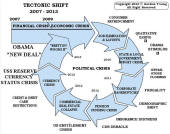
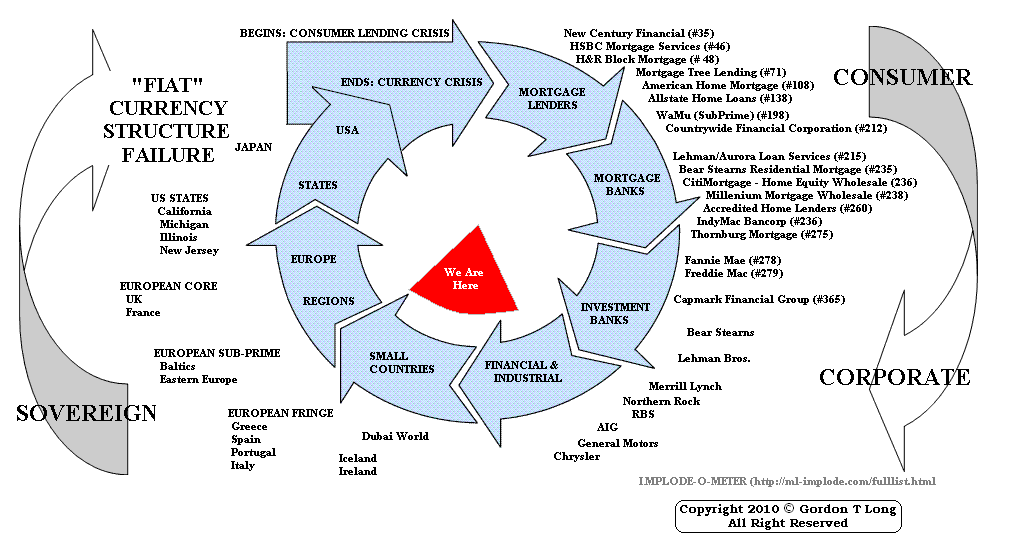
Tipping Points Life Cycle - Explained
Click on image to enlarge
TO TOP
TO TOP
|
FAIR USE NOTICE This site contains copyrighted material the use of which has not always been specifically authorized by the copyright owner. We are making such material available in our efforts to advance understanding of environmental, political, human rights, economic, democracy, scientific, and social justice issues, etc. We believe this constitutes a 'fair use' of any such copyrighted material as provided for in section 107 of the US Copyright Law. In accordance with Title 17 U.S.C. Section 107, the material on this site is distributed without profit to those who have expressed a prior interest in receiving the included information for research and educational purposes.
If you wish to use copyrighted material from this site for purposes of your own that go beyond 'fair use', you must obtain permission from the copyright owner. DISCLOSURE Gordon T Long is not a registered advisor and does not give investment advice. His comments are an expression of opinion only and should not be construed in any manner whatsoever as recommendations to buy or sell a stock, option, future, bond, commodity or any other financial instrument at any time. While he believes his statements to be true, they always depend on the reliability of his own credible sources. Of course, he recommends that you consult with a qualified investment advisor, one licensed by appropriate regulatory agencies in your legal jurisdiction, before making any investment decisions, and barring that, we encourage you confirm the facts on your own before making important investment commitments. COPYRIGHT © Copyright 2010-2011 Gordon T Long. The information herein was obtained from sources which Mr. Long believes reliable, but he does not guarantee its accuracy. None of the information, advertisements, website links, or any opinions expressed constitutes a solicitation of the purchase or sale of any securities or commodities. Please note that Mr. Long may already have invested or may from time to time invest in securities that are recommended or otherwise covered on this website. Mr. Long does not intend to disclose the extent of any current holdings or future transactions with respect to any particular security. You should consider this possibility before investing in any security based upon statements and information contained in any report, post, comment or recommendation you receive from him
|


Maersk warns on slowing global trade
A law professor and attorney has written a new book about what it's like to be a diagnosed sociopath who's never killed anybody and excels at her job.